Showing posts with label Valdez AK. Show all posts

Tuesday, August 2, 2011

Alaska Trip 2011: July 15-17 - Valdez Area Part 2

This is page 34 of our Alaska 2011 trip journal. Click here for the first page. If you want to bookmark this journal, http://jeanne-travels.blogspot.com always links to the newest page.

We continued our stop in Valdez with a visit to Worthington Glacier, followed by some more sightseeing around the area destroyed by the earthquake, a couple of museums, and the port of Valdez.

Worthington Glacier

View Larger Map

The highlight of our trip up the road from Valdez was a visit to Worthington Glacier. I have become somewhat fascinated by all the glaciers in Alaska. Unimaginable amounts of snow compressed into massive sheets of ice that become so heavy that they actually flow downhill. Icefields so big that they spawn many glaciers, both large and small. Wide, braided rivers that hold more gravel than water, deposited by the receding glaciers. It's all pretty amazing.


We had seen a preview of Worthington Glacier on the way to Valdez, and today we came back for a closer look. We were able to walk all the way out to the glacier, though for us, it was a pretty rugged hike. You start out with a fairly easy stroll on a paved walk to a viewing platform. From there, you have to find your way across the moraine and streams of meltwater.


We didn't take many pictures on the way up to the glacier, as we were focused on getting there. So we'll start with the pictures at the end of the glacier, showing we really did get there.
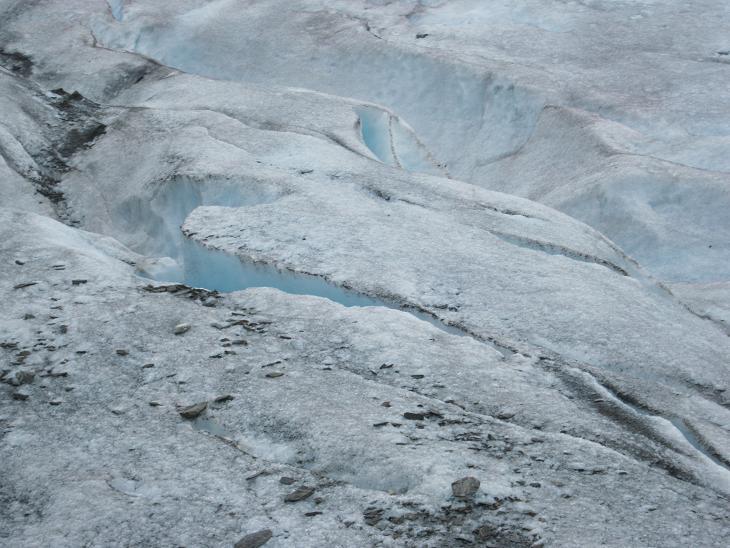


On the way back, I took some pictures looking forward and backward, showing the area we had to cross, and caught some flowers growing in the rocks of the moraine. Of course, the hike was a little easier going back down.


Valdez Glacier
You could not actually see Valdez Glacier from the end of the road that went to it - it has apparently receded beyond view. All you could see was the pond that you sometimes have near the end of a glacier, and icebergs. But judging by the size of the icebergs, and the amount of water in the stream that comes from it, there must be a pretty good sized glacier back there.


Museums
We visited two museums while here, but I forgot to take pictures at the first one which focused on Valdez history. The most significant events in Valdez history were the Exxon Valdez spill, which happened about 25 miles up the coast, and the 1964 earthquake. It might have been interesting to see where the spill happened, but the only way to get there would have been by boat, and I didn't want to see it that badly.

The other museum was a large collection of Alaskan artifacts. Many of them were items created by natives for the tourist trade, but they were pretty cool anyway. And after all, tourism is part of history also. I was most impressed by the ivory carvings - even the ships are ivory.


And for some reason, I just can't seem to resist taking pictures of good taxidermy.


Backroad
Backroads are pretty rare in this state. It's all they can do to keep their highways passable. We could see this road on the map, but had a little trouble finding the right place to turn onto the road. Once we did, we were rewarded with more beautiful scenery, and more waterfalls. We turned around when we got to the broken bridge. The road went around the bridge and forded the stream, but you could see that it deteriorated a lot on the other side. We decided it was a good place to turn around.


Old Valdez
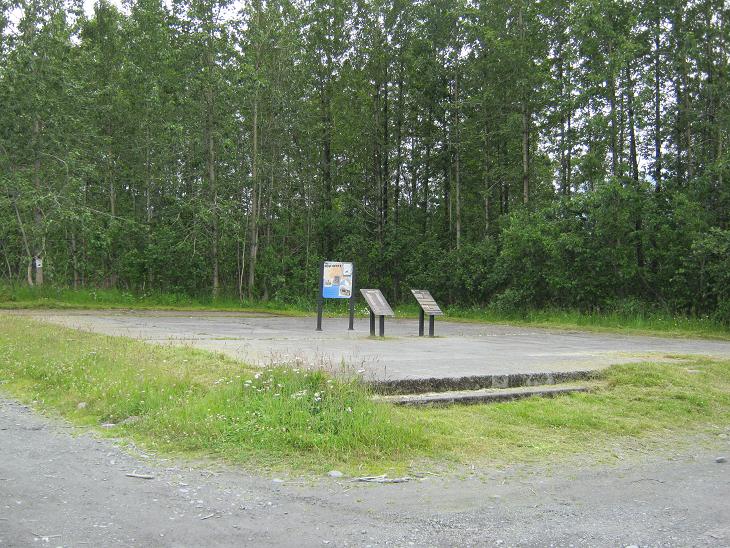
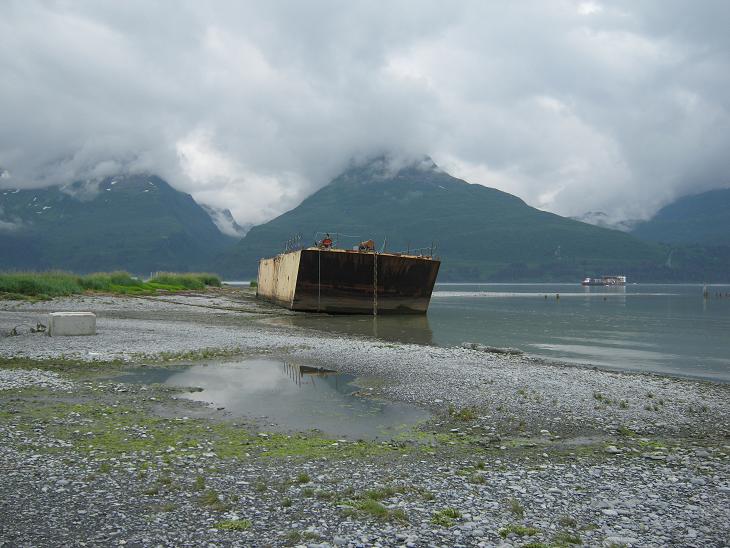
Valdez was the town closest to the epicenter of the 1964 earthquake. The resulting tsunami destroyed the dock, and did considerable damage to the town, but contrary to popular opinion, the town was not washed away. The buildings that survived were moved a new location, on a little higher ground. All you can see of the old town is the foundation of the old post office. I'm not sure if the old dock remnants and equipment were from that time or not. We also took pictures of the harbor while we were there.


Leaving the Coast
Valdez will probably be our last stop along the coast of Alaska. From here, we will be heading back inland, where we will expect the weather to be more like summer, though still not anywhere near the heat wave everyone else is experiencing.


Monday, August 1, 2011

Alaska Trip 2011: July 13-15 - Valdez Area Part 1

This is page 34 of our Alaska 2011 trip journal. Click here for the first page. If you want to bookmark this journal, http://jeanne-travels.blogspot.com always links to the newest page.

We spent a few days in Valdez, where we saw the beginnings of a salmon run, touched a glacier, and learned why the railroad goes to Cordova and not Valdez.


View Larger Map

Valdez
Valdez is another port city on the Gulf of Alaska. Like the Kenai Peninsula, the weather is heavily influenced by Pacific currents, making it mild in the winter (considering the latitude), and cool in the summer. And it rains almost every day, but it's usually just a sprinkle or two, and then it is gone. Because of the chilly weather, the Valdez version of the ice cream truck also carries hot soup and espresso.

The End of the Pipeline
We saw the beginning of the pipeline when we were in Deadhorse. Now we are at the end of the line, where the oil is loaded into ocean-going tankers for shipment.

Salmon Run
The salmon were just starting to run in Valdez when we were here. Naturally, this attracted a lot of attention - gulls, sea lions, otters, people, and of course eagles. The say the bears even show up in the area, though we did not see any while we were here.

The dark shadows in the water are schools of salmon. You can see all the fins in the closer picture. They are bunching themselves together to try to fool their predators into thinking they are a single very large object. Safety in numbers or something like that. It wasn't working. The brown blobs are sea lions tearing into them, and the gulls were feasting on what the sea lions left. Meanwhile, the eagles carried their meal back to the trees. The last picture shows some gulls having words about who gets what spot on the bridge rail. It loses something without the squawking.


Keystone Canyon
Like most towns in Alaska, there is only one road that goes there. Near Valdez, the one road passes through a steep, narrow canyon known as Keystone Canyon. The road follows the Lowe River through this canyon. How narrow is it? The braided river doesn't even have gravel bars as it passes through the narrowest part of the canyon. The first picture shows the wide river before it enters the canyon.


Waterfalls
Keystone Canyon is noted for its beautiful waterfalls. Horsetail Falls and Bridal Veil Falls are two of the most notable.


If this waterfall has a name, I don't know what it is. The water is crystal clear, indicating it is probably spring-fed. The river, on the other hand, is milky gray, indicating it is mostly glacial melt. You can see them mixing together in the second picture.


Railroad Wars
When they discovered rich copper ore deposits in the mountains north of Valdez, it was natural to think of building a railroad to the coast for shipping the ore. Valdez was the closest port, and the canyon would help keep down the cost of construction. So they started building it - this tunnel was to be part of the line.

Unfortunately for Valdez, the railroad was never built. There was a territorial dispute over who had the rights to build in Keystone Canyon, even going to the extent of having gun battles in the canyon. Meanwhile, the railroad was built across the mountains to Cordova, and Valdez lost out.

Thompson Pass
It was cloudy and drizzly when we got to Thompson Pass, and we started to get up into the low ceiling (around 3000 ft). This made the pictures a little hazy, but it was still a beautiful view. At its highest point, Thompson Pass is above the tree line. The road is nice and wide now, but in the past, heavy snowfalls made the pass pretty treacherous in the winter.


To be Continued...
Wow - we have lots of pictures from the Valdez area - think I'll split it into two pages.