Today we took a ride on the Yukon & White Pass Railroad. They started building the railroad during the Gold Rush, and for many years, it served not only the mining community, but also served as a transportation route for passengers and other goods. Today it operates as a tourist excursion. It once went all to Whitehorse, but we only rode as far as the Canadian border at Summit Lake and back. They do have longer excursions, but for this trip, you do not need to deal with customs and border crossings.
Rotary Snowplow
They keep this rotary snowplow on display near the depot for most of the season, but in the spring, they actually use it to clear the winter snow from the track. An interesting side note - they actually take passengers for this expedition. Even though they can't promise when it will be, because that depends on the weather, the trip is still usually sold out a year in advance.

The Train
Not sure if this is the actual train we rode, or another that was leaving near the same time, but we took these pictures outside the station before we left.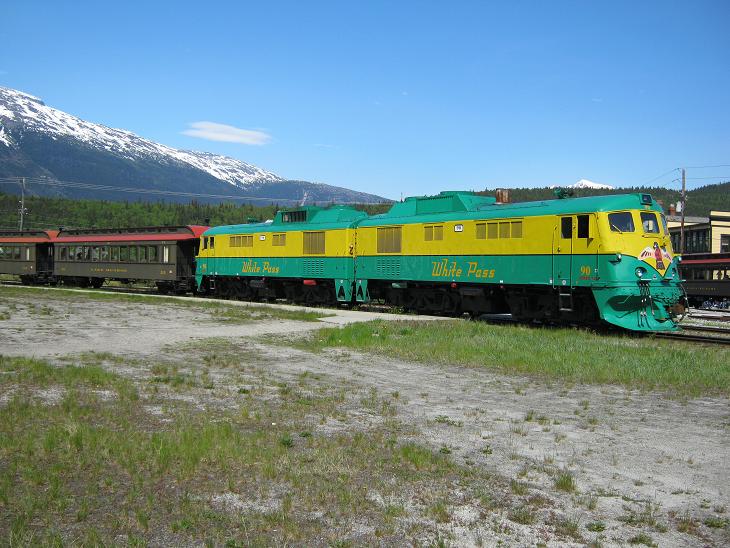

The Mountain Side
For the ride up to the summit, we were sitting on the mountain side of the coach. This is a very different view from what you see on the other side. You can see into the woods, or try to catch a glimpse of many little waterfalls on the way by, or look up to the top of the mountain.


The railroad donated this caboose to the forest service. Hikers & backpackers use it for an overnight stay on the trail.
We took several pictures of the other side from where we were sitting. Most of them did not work out very well, but a couple turned out ok. This one is a view of another train on the upper side of a long hairpin turn. We will be at that spot in a few more minutes. The other shot is an old wooden trestle that is no longer in use.


And here are a couple more Mountain Side views...


White Pass Summit
The US-Canadian border here follows the summit of the mountains, so this was as far as we could go without going through customs. The train pulled into a passing track, and then everyone switched sides so we all had a chance to see the view on both sides. The engine went around to the new front of the train and we went back down.
Summit Lake is still frozen right now, but it thaws out later in the summer.

You can see where the snowplow cut through the snow here. It was probably even deeper than that when they first cleared it.

The Northwest Mounted Police eventually became the Royal Canadian Mounted Police. During the gold rush, the Mounties were concerned that people would get out in the wilderness and starve to death, so they did not let them into the country without a full year's supply of provisions.

The train dropped off a couple of hikers at the summit. The tour guide referred to them as bear bait.
The Scenic Side
Here are some better views of the old wooden trestle


Don't look down! These pictures show just how steep it is on parts of the route. If it looks almost straight down, that's because it is. At this point the train track is well above the trail used during the gold rush. This area of the trail is known as Dead Horse Gulch. Unlike on the Chilkoot trail, prospectors taking the longer White Pass route were able to use pack animals to carry part of the load. Demand far exceeded the supply, and people started shipping in horses otherwise bound for the glue factory. They were nowhere up to the task, and to make matters worse, they were generally overworked and underfed. When they died, the miners just went back and got more. Thousands of horses died on this trek of futility.


Can you stand just a few more scenic views from the train?


This engine was on display at the maintenance shop. They described it as the little engine that could, but can't any more.


 Posts
Posts

